

# Can Wearable Data Be Trusted? A Practical Way to Read Your B8
Wearable data can feel wonderfully immediate: a glance at your wrist, a number, and a new detail about your day. But the better question is not whether one reading tells the whole story. It is how a series of readings can help you notice your own patterns.
With B8, we designed an everyday smart band that makes quick check-ins easy to fit into a routine. Its 1.57-inch full-touch display puts key information within reach, while its compact wrist format keeps the experience simple. The most useful habit is equally simple: look for direction over time, keep the circumstances in mind, and let the device support curiosity rather than certainty.
Can Wearable Data Be Trusted? Start With Trends
A single number is a snapshot. Your routine is the larger picture. A late night, a long commute, a demanding workout, travel, hydration, room temperature, and even how the band sits on your wrist can all change what a snapshot looks like.
That is why repeated use matters. When you wear B8 consistently during comparable parts of your day, the information becomes easier to place in context. Instead of asking whether one result is “good” or “bad,” ask gentler, more practical questions: Is this typical for me? Has my routine changed? What was different today?
B8 supports activity records and multiple sport modes, giving you another way to connect a number with what you were actually doing. A walk, a workout, or a quieter day at your desk each belongs to a different context. Seeing that context clearly makes your own comparisons more useful.
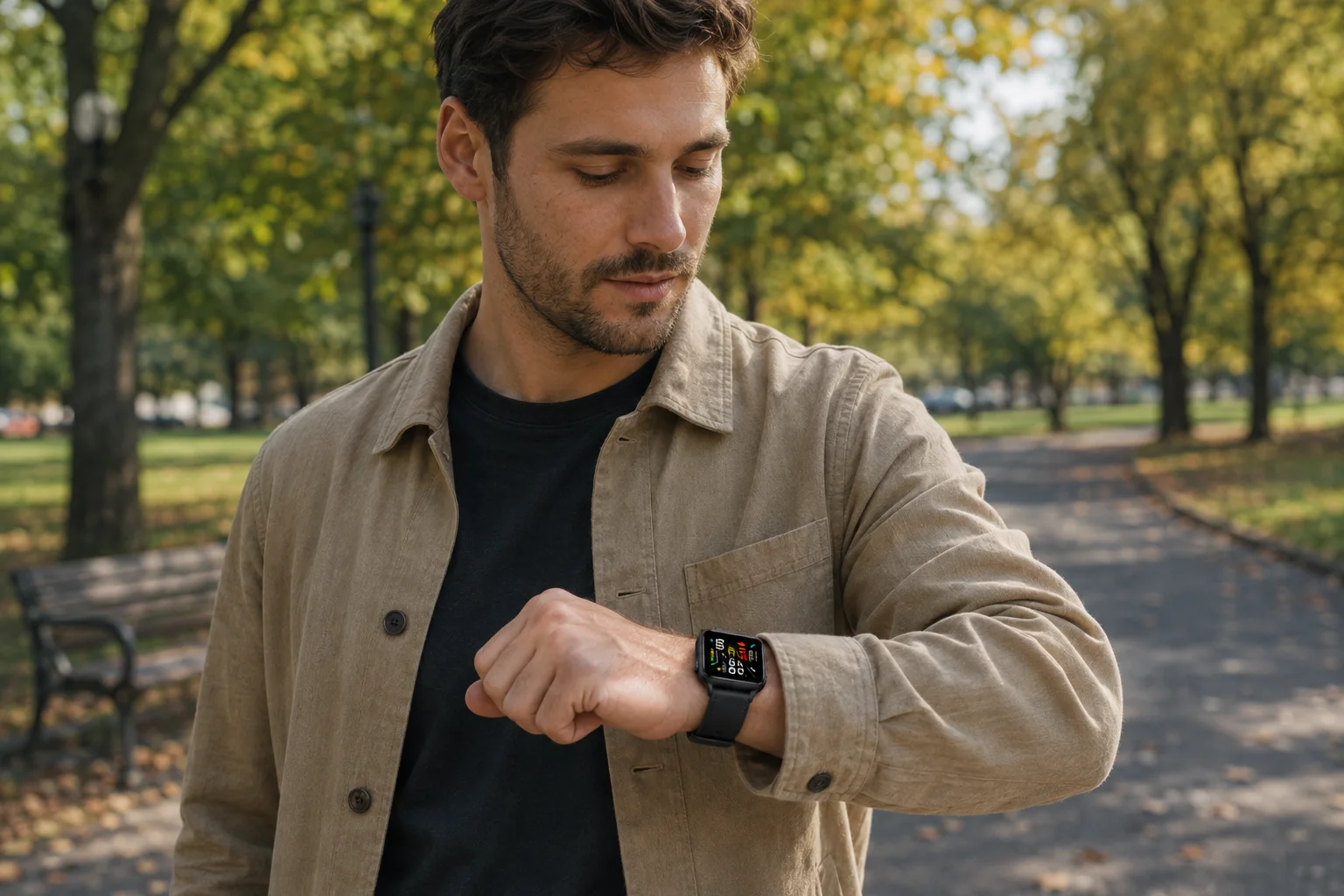
Consistency Makes Comparisons More Meaningful
Consistency is not about chasing perfect numbers. It is about making your comparisons fairer. Wear B8 with a comfortable, secure fit, and check it at similar moments when possible—perhaps after you wake up, after a walk, or as you settle in for the evening.
Try not to compare a rushed weekday morning with a relaxed weekend afternoon as if they were identical. A pattern is more useful when the moments behind it are similar. Over time, a small personal routine can turn an occasional glance into a clearer record of everyday rhythm.
The B8 full-touch display is built for those brief, intentional moments. You do not need to turn every check-in into a long review. A quick look at a familiar time of day can be enough to help you recognize whether the day feels typical or different.
Keep the process light. Pick one part of your routine to observe for a couple of weeks. Keep the setting and timing reasonably similar. Notice broad changes instead of tiny fluctuations. Then decide whether the pattern gives you a useful prompt for the next day.
Add the Part Data Cannot See
Numbers are only one part of a day. They do not capture the project that ran late, the flight you caught at dawn, the dinner with friends, or the decision to take an extra walk. Your own notes and memories supply that missing context.
A simple approach works well: when something seems different, pause and recall the day around it. Did you change your sleep schedule? Spend more time sitting? Add a new workout? Travel across time zones? These everyday details make personal trends easier to interpret without turning every reading into a verdict.
This is also a useful reason to check B8 with intention. Choose a moment when you can reflect for a minute instead of repeatedly refreshing the display. Data becomes more practical when it sits beside your lived experience.
B8 can also keep everyday tools close at hand. Bluetooth 5.3 BLE connectivity, reminders, and music control help the band fit naturally into a connected daily rhythm. Those conveniences do not replace context; they can make a purposeful wrist check feel easier to maintain.
Use B8 as Part of a Wider Routine
A wearable is at its best when it supports routines you already value. For some people, that may mean noticing how a regular walk fits into the week. For others, it may mean building a more consistent bedtime, taking a break from the desk, or simply staying aware of how different days feel.
B8 can be a small, visible cue on your wrist: pause, check in, and reconnect the day’s information with the day itself. There is no need to make every metric a target. The value often comes from seeing your routine with a little more continuity.
Its IP67 water-resistance rating also helps B8 fit ordinary daily movement without requiring a separate device for every setting. Choose the moments that matter to you, then make the band part of that familiar rhythm.
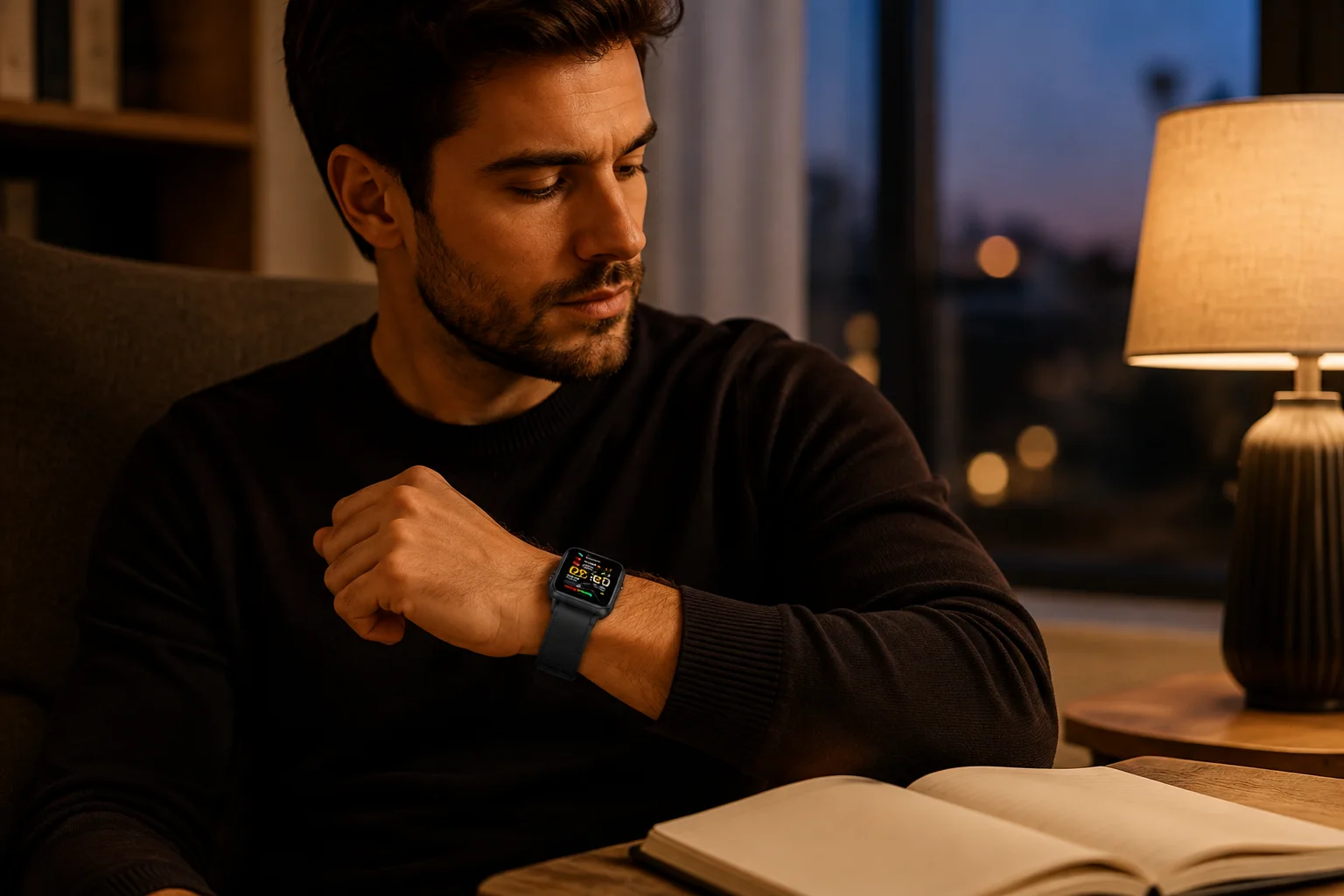
Questions That Lead to Better Wearable Insights
The questions you ask shape the usefulness of any wearable. Instead of looking for a final answer from one screen, try questions that connect information to action:
- What does a typical weekday look like for me?
- Which routines help me feel more settled and consistent?
- What changed before this pattern appeared?
- Would a few more days of comparable data make the picture clearer?
These prompts keep the focus personal and practical. They also leave room for normal variation, which is part of every real routine. That perspective is especially helpful when a busy day looks unlike the one before it.
A More Thoughtful Way to Check In
Can wearable data be trusted? It can be useful when it is read as a personal record of trends, not as a standalone conclusion. B8 is there to make those daily check-ins easy to carry with you.
Wear it consistently, compare like with like, and pair what you see with the context only you know. With a 1.57-inch full-touch display, activity records, multiple sport modes, reminders, music control, and a choice of black or brown styling, B8 brings practical everyday tools together in one wrist-ready format.
Explore B8 and build a check-in habit that fits your day.