

Running Heart-Rate Monitor Choices: A W8 Ultra-R Running Routine
Running heart-rate monitor choices can get confusing once a simple training question turns into a shopping list. A wrist-worn device, an upper-arm sensor, a chest strap, a phone, and a running watch can appear to cover the same ground. They often have different jobs. Start by deciding what you want to check while moving, what you want to review later, and what you are comfortable wearing through an ordinary day.
At SAYDIAN, we approach a running setup as part of a wider routine. The W8 Ultra-R has an inflatable cuff, a soft TPU contact surface, a zinc-alloy case, and an integrated profile. For a runner who keeps training gear separate from an everyday wearable, those physical details matter before the first mile.
Start with the routine you already have
Look at the runs you actually do before comparing sensor formats. A short neighborhood run before work has different needs from a long weekend route. Some runners want a phone for audio and route guidance. Others prefer a lighter setup. Those habits help determine which device belongs on the wrist and which can stay with the rest of the gear.
A dedicated running device can suit sessions where you want a training-focused screen. A separate sensor can have a role when that format fits a specific session. An everyday wearable serves another purpose: it stays in the flow of getting ready, commuting, working, and winding down. Giving each item a clear role makes the whole setup easier to use.

Running heart-rate monitor choices: what matters most
The discussion around running heart-rate monitor choices usually comes back to comfort, connection, battery habits, and how a device fits a training routine. These are useful questions because the right arrangement depends on how you run and what you already carry.
Comfort is worth considering early. A wearable that catches on a sleeve or feels distracting during movement is harder to keep in regular use. The W8 Ultra-R uses a silicone airbag cuff with a multi-layer construction. Its soft TPU material, zinc-alloy case, and integrated form are practical details for anyone looking for a watch that can feel settled on the wrist through the rest of the day.
Battery habits shape a decision too. The W8 Ultra-R is listed for up to 7 days of typical use, up to 15 days of standby time, and a 2.5-hour charging time. Actual use can vary. Those stated figures give you a starting point for a weekly charging routine, especially if you prefer to prepare your gear before a busy stretch.
Connection choices should follow the devices you already use. Think about which screen you want to consult while running, where you prefer to keep your training records, and whether a separate sensor has a useful place in your own sessions. A clear division of jobs prevents a running kit from becoming a collection of overlapping devices.
Give each device one job
A running setup can stay simple. Your phone may handle route guidance or audio. A training device may be the display you consult on a run. A separate sensor may be reserved for sessions where it suits your preferences. The W8 Ultra-R can be the everyday piece in that mix, with a cuff design and materials intended for comfortable daily wear.
This role-based approach makes shopping less abstract. Ask whether a device earns a place in the routine you already have. A watch that moves from a pre-run shoe check into the rest of a weekday has to feel appropriate outside the workout as well.
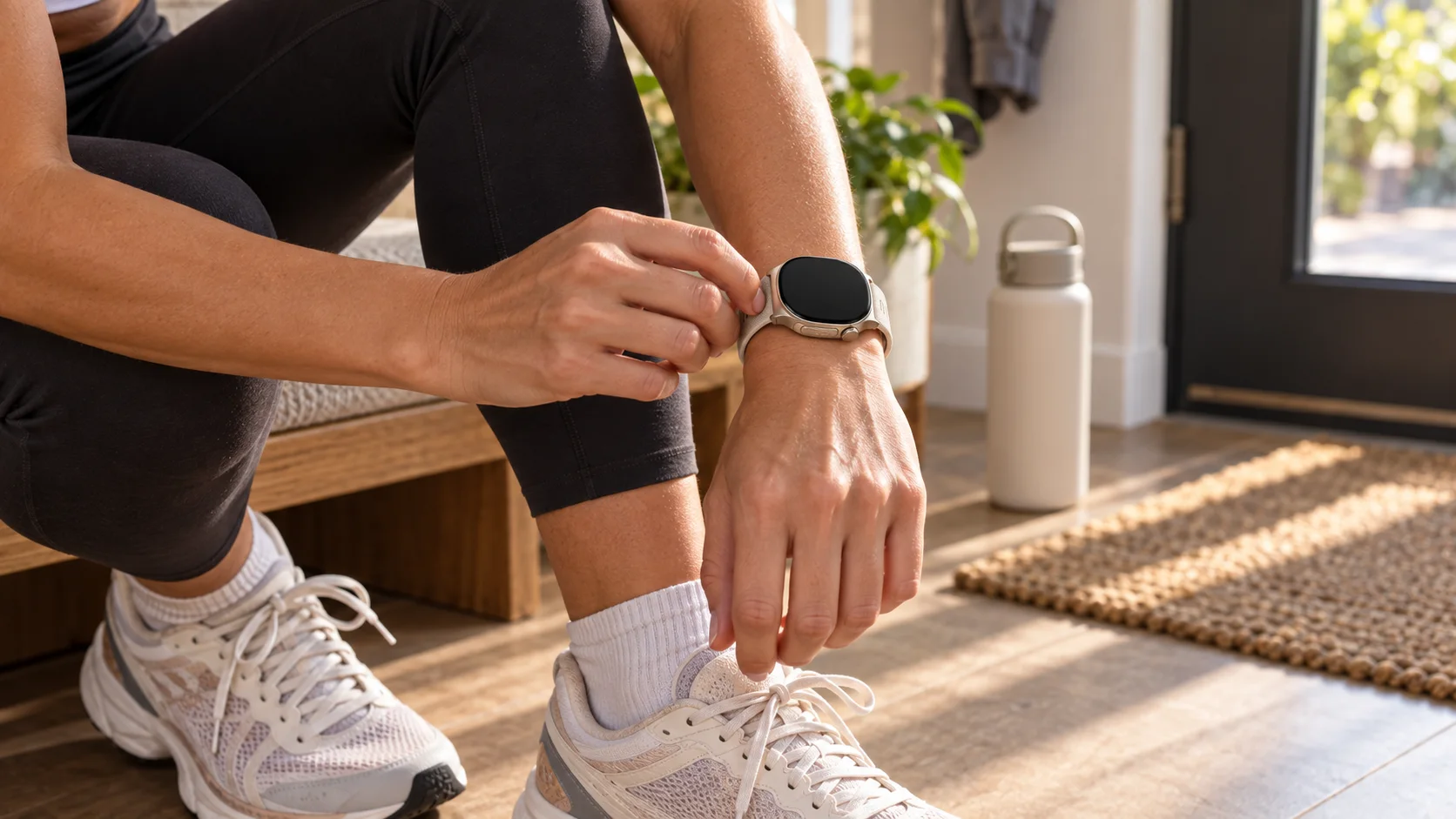
The W8 Ultra-R uses an inflatable cuff design rather than a traditional strap-and-case feel. Its soft TPU surface, silicone airbag cuff, zinc-alloy case, and integrated build give the watch a distinct physical character. Those are the details to assess if you want an everyday wearable that fits alongside your chosen training equipment.
Think beyond the workout
A run takes up only part of a day. The minutes before leaving, the walk home, desk hours, and evening routine usually last much longer. That is why the physical feel of a wearable deserves as much thought as its place in a run kit.
The W8 Ultra-R pairs a zinc-alloy case with a soft TPU surface and silicone airbag cuff. Its multi-layer cuff is designed for a secure, comfortable feel. The breathable material and integrated build are intended for all-day wear. These are direct design details, yet they become more important when a watch moves from run preparation into a normal day.
A charging habit can make the routine smoother. Keep the charger where you already prepare running gear, or use one regular time each week. The W8 Ultra-R's stated 2.5-hour charging time and up-to-7-day typical-use figure provide a practical reference for planning that habit.
A calmer way to choose
You do not need every kind of running sensor to build a useful setup. Begin with your routes, your preferred screen, and the kind of everyday wearable you want to use. Add another device when it has a specific job in your training.
For runners considering how a cuff-style watch fits beside their chosen running gear, the SAYDIAN W8 Ultra-R brings together an inflatable cuff design, soft TPU material, a zinc-alloy case, and a stated weekly-use charging rhythm. Explore the W8 Ultra-R to see whether its everyday fit suits your own running routine.